Riverfront lighting standards for commercial properties in Pittsburgh
Pittsburgh's three rivers have shaped commerce, industry, and public life for centuries. Today, the riverfronts are evolving again, this time as mixed-use corridors where retail, dining, offices, and housing share the shoreline. Along with that transformation comes a recurring planning question: how bright should commercial lighting be, and how should glare be controlled?
The Riverfront (RIV) zoning district addresses these questions through specific text, height maps, and proposed amendments. Lighting standards in commercial zones are not merely decorative concerns; they affect river ecology, residential comfort, traffic safety, aviation, and the character of public open space. As Pittsburgh continues to revise its riverfront rules, the way illumination is regulated offers a useful window into broader land-use priorities.
Why glare control matters in waterfront commercial settings
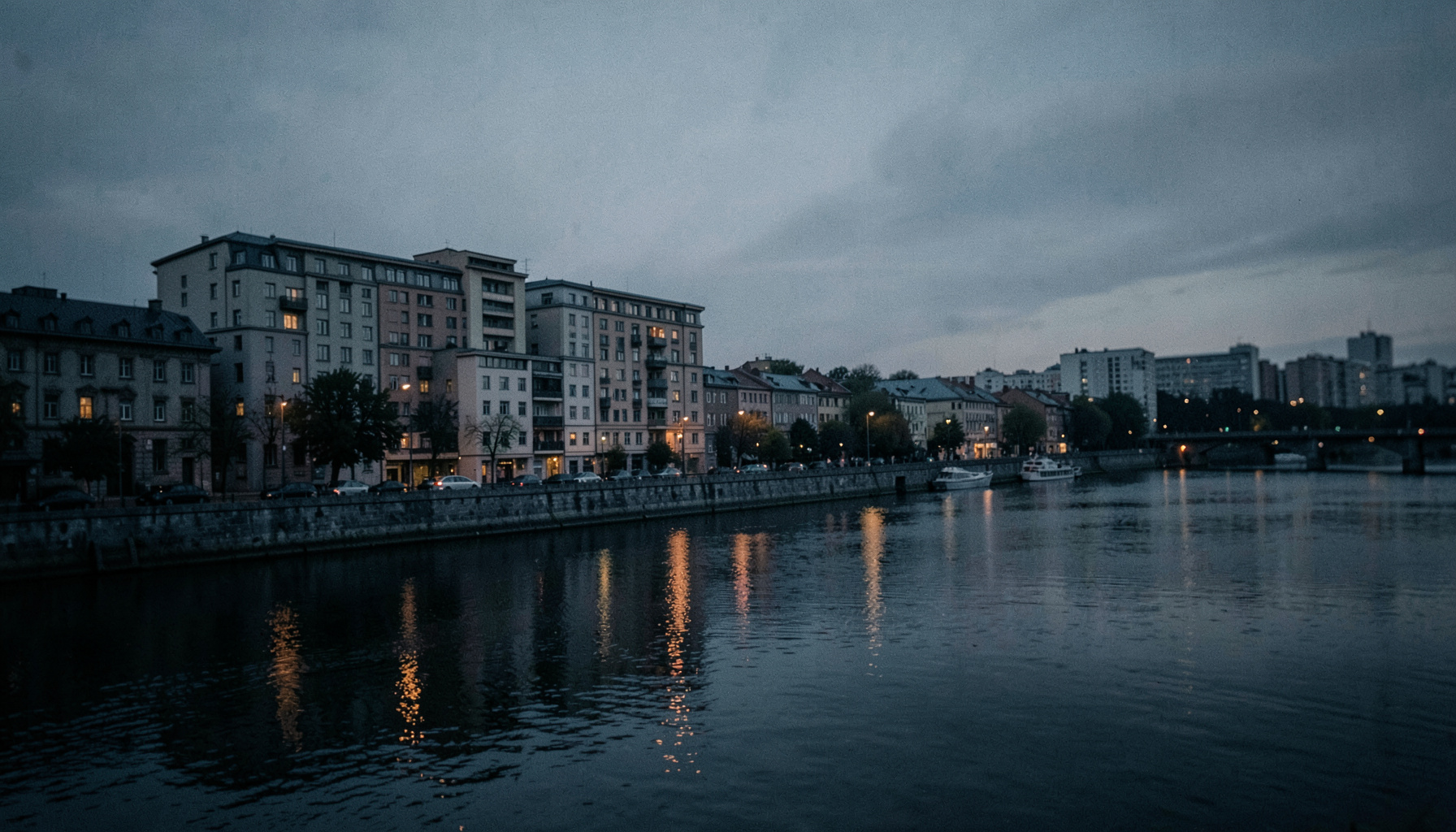
Waterfronts concentrate light because they combine reflective water surfaces, low ambient surroundings, and clustered entertainment uses. A bright facade that looks acceptable on a downtown high street can become blinding when mirrored off the Allegheny or Monongahela at night. The same effect shows up along Australian harbour fronts such as Sydney Harbour, where pier restaurants and riverside bars compete for visual prominence, prompting planners to revisit how luminance is measured and capped.
Glare also affects wildlife. River corridors in Pittsburgh host migratory birds, bats, and aquatic species that respond to artificial illumination along their routes. Spill light that crosses the water or rises into open sky disrupts movement patterns and foraging behaviour. Conservation work along the Brisbane River has documented comparable pressures on local fauna, and the mitigation strategies overlap with what the RIV district is now considering.
How the RIV zoning text approaches illumination
The current RIV text includes provisions for maximum foot-candle levels at the property line, full-cutoff fixture requirements, and limits on uplighting for architectural features. These rules are tied to the broader purpose of protecting adjacent residential blocks, the river itself, and the visual integrity of the riverfront corridor. Commercial operators seeking signage illumination or outdoor seating lighting must demonstrate that proposed fixtures comply with cutoff and shielding standards.
Height maps accompanying the zoning text also interact with lighting design. Taller structures near the river can mount fixtures higher, but they can also cast light over a wider radius. The combined height-and-luminance review is unusual in American zoning, and it reflects a recognition that vertical and luminous impact are linked. Proposed amendments under discussion this autumn would tighten after-hours dimming requirements and add explicit thresholds for colour temperature, a parameter more familiar from Australian standards such as AS/NZS 4282.
Comparing Pittsburgh's framework with practice elsewhere
Australian planners have wrestled with the same trade-offs for years. Melbourne's planning scheme includes obtrusive lighting controls that limit spill into residential zones, tying lighting intensity to surrounding environment classifications. Each of those frameworks relies on installers, designers, and property owners to translate technical language into workable hardware choices.
Pittsburgh's RIV approach draws on similar principles but applies them in a temperate river valley where winter darkness, summer humidity, and fog all change how light behaves. The result is a set of rules that emphasises adaptability. For owners, knowing how to appeal a riverfront zoning decision becomes important when a fixture design is denied or when a condition of approval seems unreasonable. Procedural clarity helps avoid disputes about technical interpretation.
Public participation in shaping lighting rules
Public comment is where lighting rules become legible to residents. Pittsburgh's Planning Commission and City Council both accept testimony on the riverfront zoning text, and the public comment period opens for draft riverfront zoning text signals a structured moment when residents, designers, and business owners can weigh in. Verbal testimony, written submissions, and community meeting comments all become part of the legislative record.
For residents, the practical question is whether the rules they support during the comment period will hold up against later administrative interpretation. Independent monitoring resources that document zoning follow-through capture how rules shift after adoption, and that follow-through matters when a corner bar installs uplighting that the public had assumed was prohibited. Engagement continues after the hearing, through monitoring and, when needed, formal appeals.
Practical considerations for commercial property owners
Owners planning tenant fit-outs along the riverfront should treat lighting as an early design decision rather than a last-minute permitting detail. The RIV district's interactive review covers fixture cutoffs, mounting heights, colour temperature, after-hours operation, and signage brightness. Designs that ignore one of those parameters often require costly retrofits after plan submission.
A few habits reduce friction with the city. Confirming fixture specifications before purchase, requesting a pre-application meeting with planning staff, and reading the proposed amendments alongside the adopted text all help. Owners with multiple riverfront parcels benefit from consistency across properties, since adjacent uses are evaluated together when spill light crosses lot lines. Working through these steps early avoids surprises during certificate of occupancy review.
Recommendations for residents and design professionals
- Review the latest RIV district text and proposed amendments before submitting a project application.
- Ask planning staff how Australian-style parameters such as correlated colour temperature limits are interpreted locally.
- Document glare complaints with photos, timestamps, and weather notes to strengthen any future testimony.
- Coordinate with neighbouring property owners when exterior lighting could affect shared sightlines across the water.
- Attend Planning Commission and City Council hearings during the open comment window to register support or concerns.